
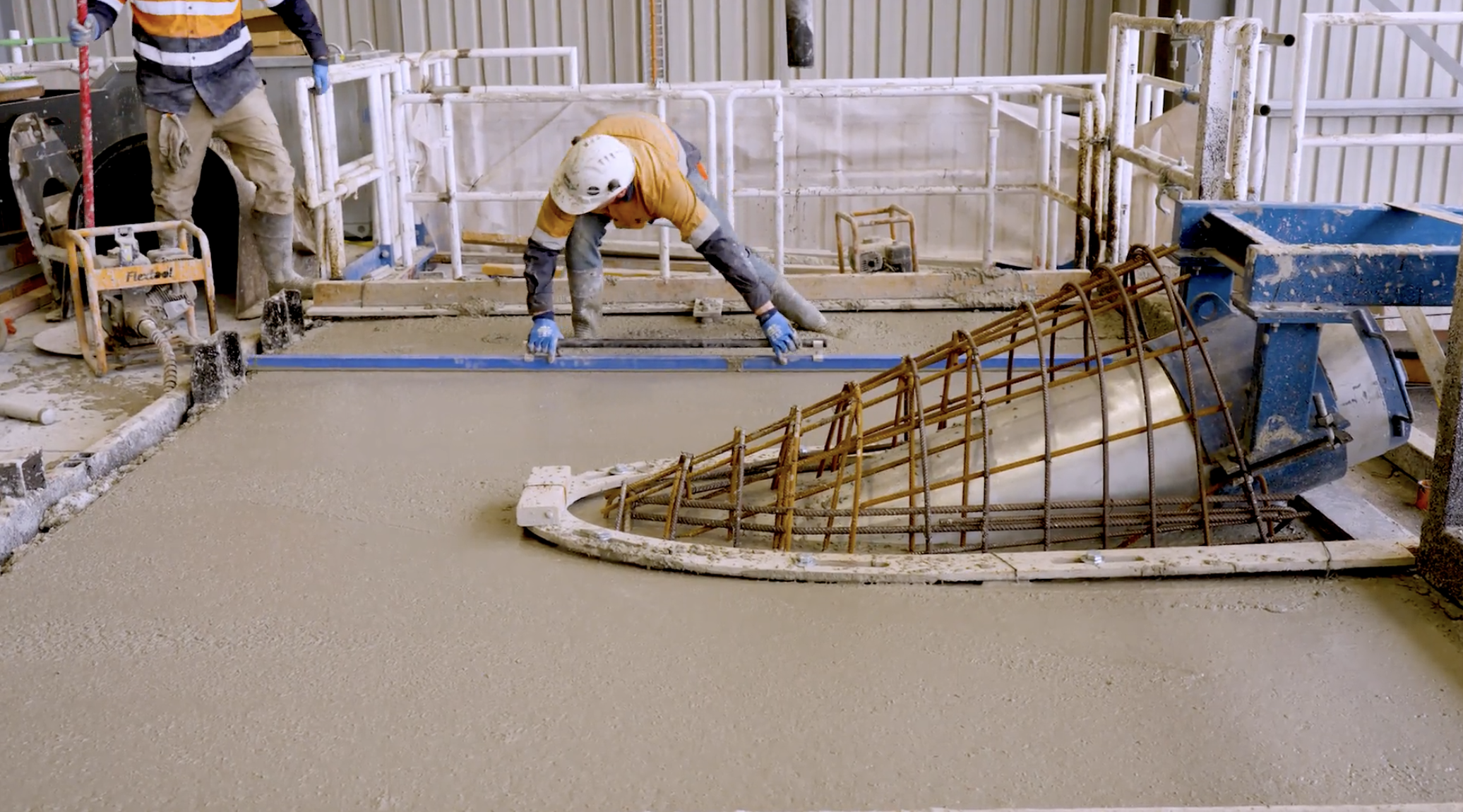
Laing O’Rourke, as part of the Fremantle Bridges Alliance, is delivering the Swan River Crossings Project in Western Australia, replacing the ageing Fremantle Traffic Bridge with a new extradosed, four-lane structure. The project involves complex in-situ and precast concrete works, including 35-metre towers and large mass concrete elements, delivered under tight programme and compliance constraints.
Laing O’Rourke, as part of The Fremantle Bridges Alliance, is delivering the Swan River Crossings Project. The new extradosed, four-lane structure that will replace the Fremantle Traffic Bridge built in the 1930s. With tight programme pressures, large mass concrete elements, 35-metre towers, and a demanding precast segmental schedule, the team needed a way to keep construction moving without compromising compliance.

Traditional concrete testing methods introduced friction at every stage. Cylinder crushing created 6–8 hour delays, and any failed result meant waiting even longer. Ensuring temperature compliance on mass pours was challenging, especially on a “tightly timed constrained project.”
To meet the schedule, Laing O’Rourke needed real-time visibility over when the concrete would be ready to act on, temperature, and compliance — across both in-situ and precast operations.
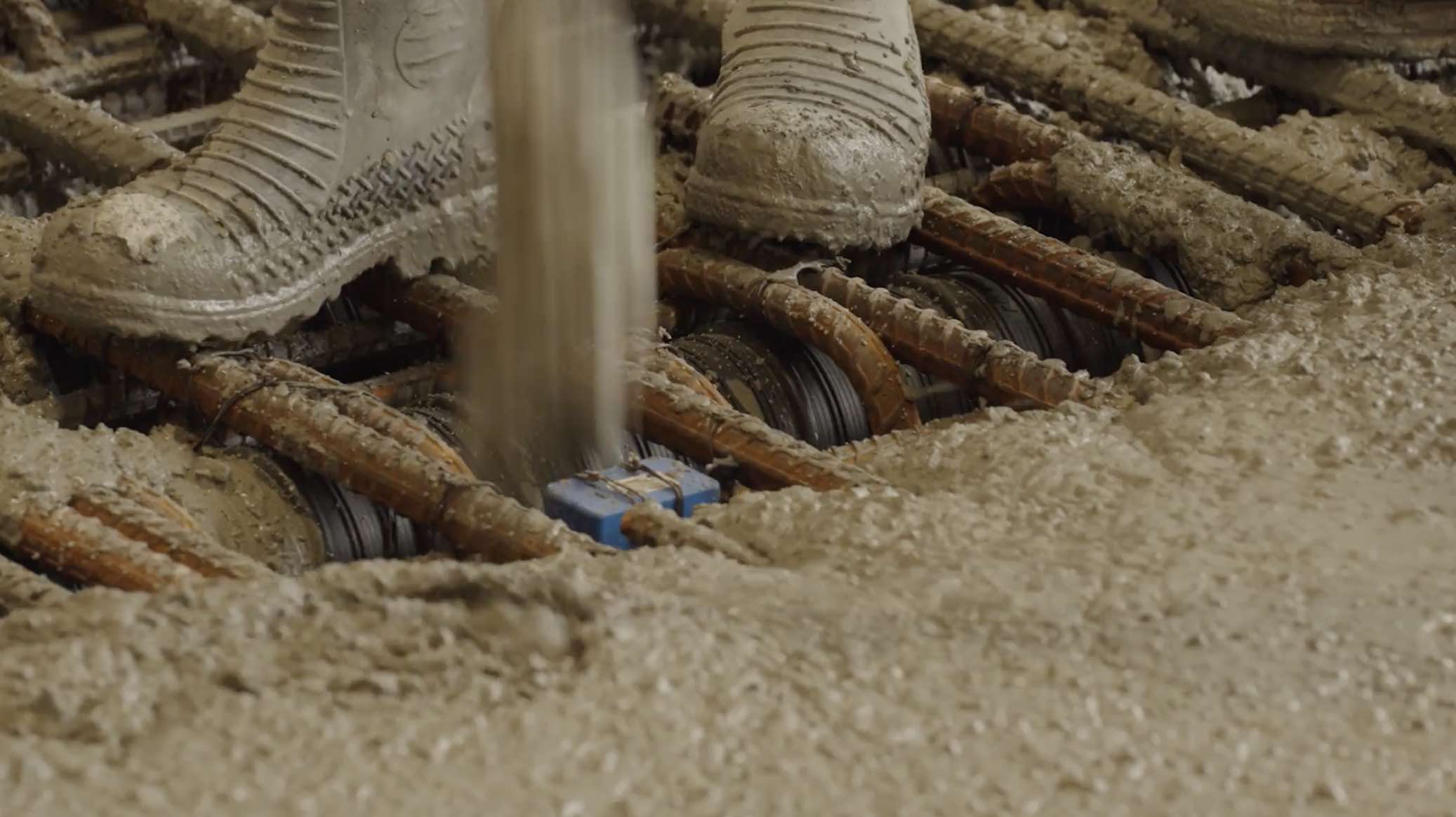
Laing O’Rourke adopted Converge’s Signal sensors, real-time maturity monitoring, and cloud-based platform across the Fremantle project, giving engineers instant access to accurate, continuous concrete data, on and off site.

Key Capabilities Delivered

Reduced risk of non-conformance: Real-time monitoring kept temperature differentials and maximum values within specification, eliminating the risk of late-stage surprises.
Meaningful daily time savings: Live maturity data removed the bottleneck of lab testing, saving 2 hours per day, over the conventional means of cylinder crushes in the precast factory. Across in-situ works, real-time data saved between 6–8 hours, often accelerating the programme by a full day.
Better control of cycle times: Strength thresholds for stripping and climbing could be hit with certainty, improving the rhythm of repetitive tower and segment tasks.
Reporting in seconds, not hours: Thermal insights were automatically compiled into clean, compliant reports — dramatically reducing admin time.
Remote visibility improved decision-making: From weekend monitoring to tower operations, engineers had full oversight without needing to be physically present.
Cleaner, smoother precast production: Embedded wireless sensors prevented wire exposure and streamlined strip-time decisions.